Holding text
What You Get


What You Get
Module 1
Date
Time
Duration
Length
In Module 1 we will focus on the brain
Module 1
Date
Time
Duration
Length
In Module 2 we move more to the practical tools and techniques for changing your Inner State.

Practical. Powerful. Surprising.
What Others Say
From leadership teams to diverse organisations across the globe, the words we most often hear are 'inspiring', 'surprising' and 'practical'. Here are some other things people have to say:


The Brain Innovation Project
INTRODUCTION
Locked away in a black box (our skulls), our brains do not experience reality ‘as is’, but rather their ‘internal model’ of the world. Or, more accurately, models of ourselves in the world, which emerge from our deep biological instincts and our lived, learnt experience.
Our models seem so natural to us that we often fail to question them. The result? We cruise along on autopilot, with our models acting as self-fulfilling prophecies, as our brains seek to confirm and fulfill their expectations of ourselves in the world around us.
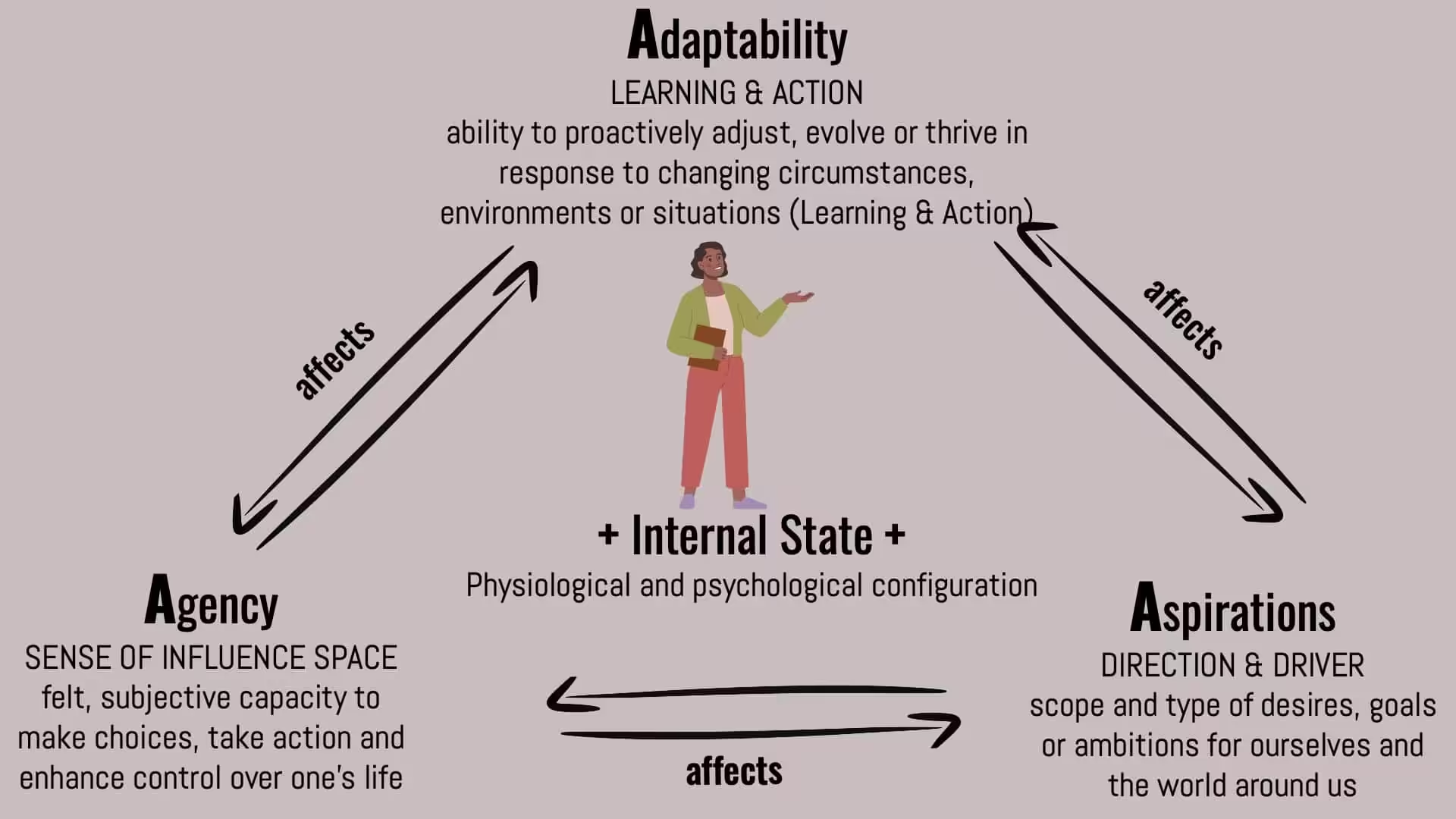
Our internal models are extraordinarily complex, containing our own perceived limitations and possibilities (sense of Agency),* explicit and implicit goals (Aspirations) and scope and opportunities for learning and action (Adaptability).
These areas – Agency, Adaptability and Aspirations – are entirely interdependent. For example, a low sense of Agency is (‘I can’t do much to change a situation’) is likely to lead to correspondingly low Aspirations. High Aspirations (big goals) combined with low Adaptability (ineffective learning and action) is likely to result in frustrated dreamers, etc., etc.
The 3 As are fundamentally affected and driven by an additional dimension which is all too often overlooked – our Internal State. Our Internal State is our total psychological and physiological configuration at any one time. We generally experience it as an overall feeling, which acts as a ‘snap shot’ of our perceived internal condition. Broadly and simplistically speaking, this consists of two main parameters – how ‘good’ or ‘bad’ we feel (valence) and whether we have ‘high’ or ‘low’ energy (arousal). We are always in a state – even if we are not aware of it – and this fundamentally shapes the perceived options available to us. It really is a crucial piece of the puzzle in understanding our behaviour and choices.
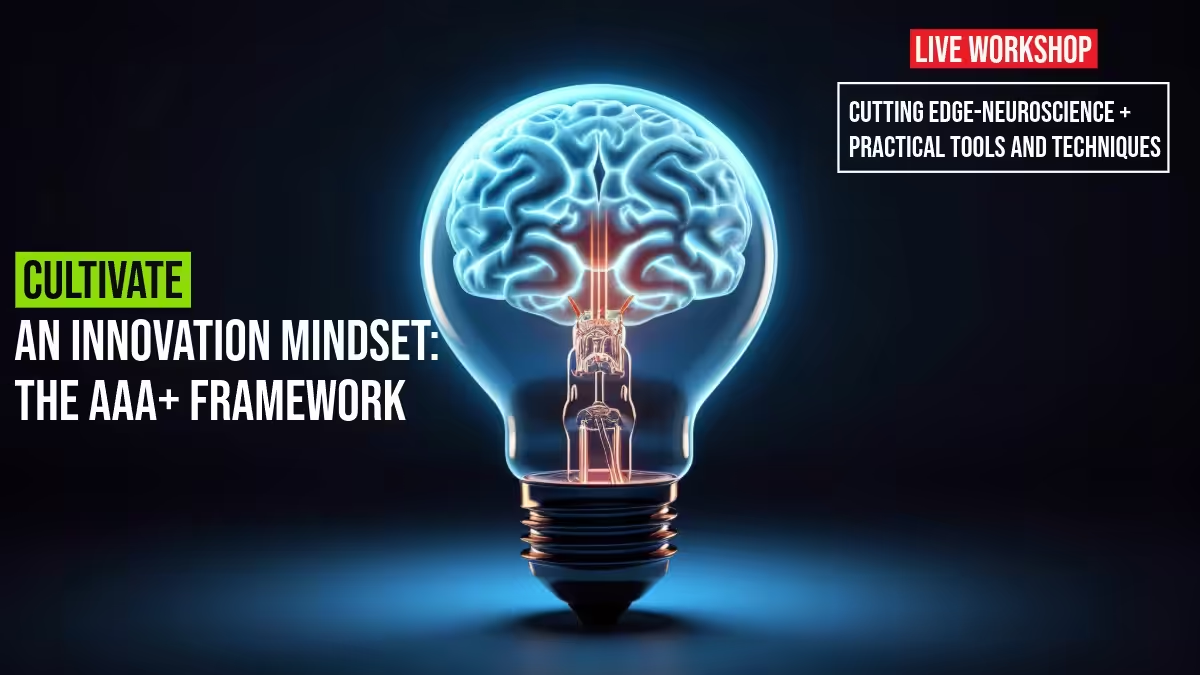
The AAA+ Framework brings together these four dimensions in a simple and intuitive way. It acts as a lens through which to view and understand our adaptive behaviour, thereby opening new opportunities for focus and action.
The ONLINE Version
This simplified online version is tailored to individuals, but the approach is entirely scalable across groups, teams, organisations and societies. If you want to use the tool to think about groups, simply replace the word “I” with “we” in the questions.
While this online version cannot explore the deeper theoretical background of the model nor provide the tools and techniques to address the issues identified (that is for workshops and courses), it does provide an entry point for reflection and insight.
To proceed, simply enter an intention or goal below and answer 20 questions grouped around Agency, Adaptability, Aspirations and Internal State in relation to this.
The aim is not to score high, as there are no right or wrong answers; the purpose is to identify leverage points for action. Also, focus on the spirit of the statements/ questions as they make sense to you, rather than worrying about the exact wording.
*IMPORTANT NOTE: We are talking about the subjective sense of Agency (as perceived by the person), not the objective circumstances. This is a fundamental distinction to make, as making your own sense of Agency dependent upon circumstances exactly takes away your Agency. For example, during his 27 years in prison, Nelson Mandela did not have much objective control over his situation, but he clearly had a strong felt sense of Agency. How we actually respond to objective circumstances are more in the domain of Adaptability.